
What It Really Means to Eat Seasonally in the Pacific Northwest
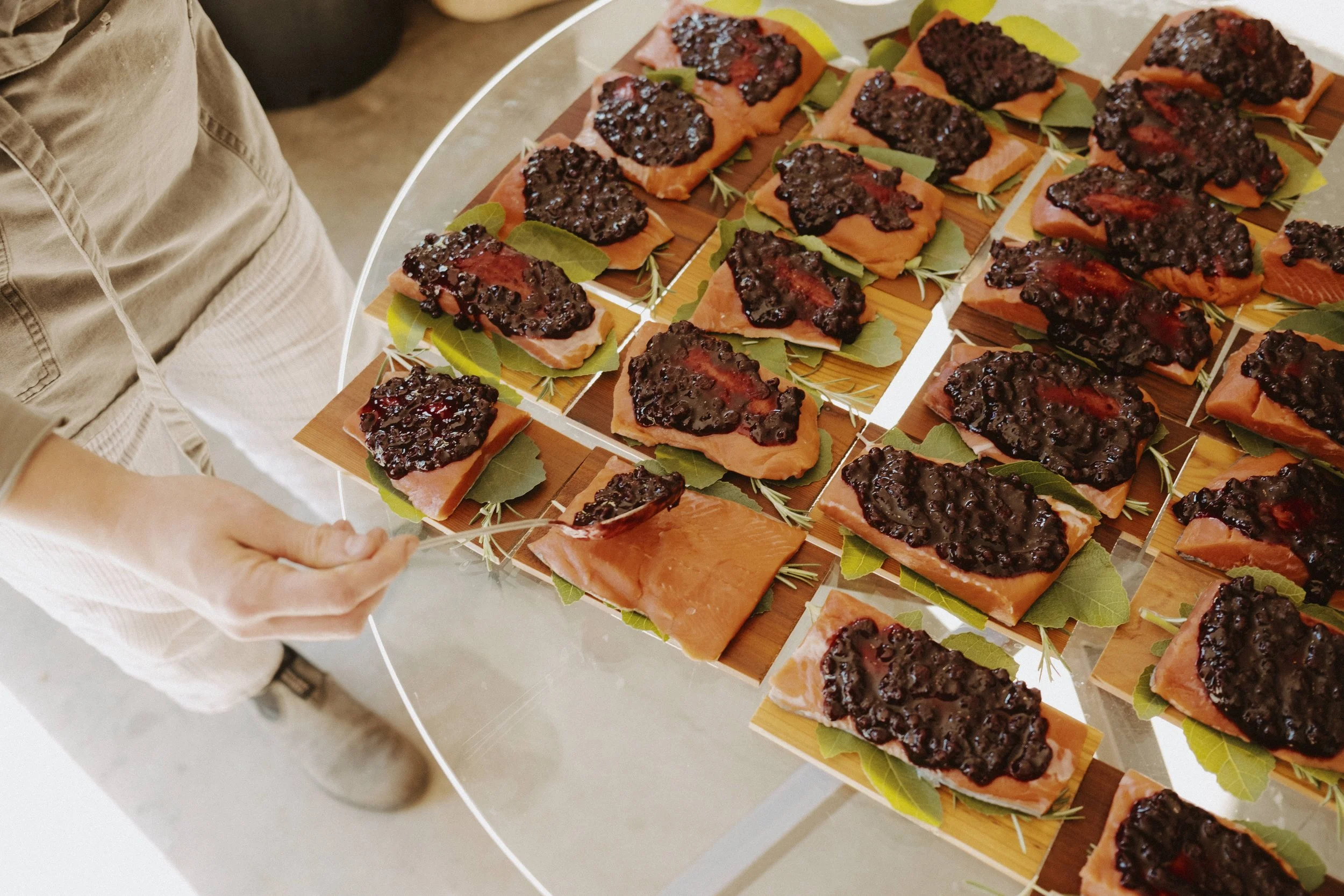
Chef Paige about to grill wild native caught chinook salmon with huckleberry glaze on a fig leaf/ rosemary sprig on cedar planks
Farm-to-Table Chef | Columbia Gorge | Wild Food Portland
Eating seasonally has become a buzzword. But here in the Pacific Northwest, it’s not a trend. It’s a relationship. A rhythm. A way of aligning your meals with the forests, farms, rivers, and shifting light of this region.
As a farm-to-table chef in the Columbia Gorge, I’ve built my craft around the seasons. Everything I cook for private dinners, retreats, meal delivery clients, or tasting menus , begins with one question:
“What is the land offering right now?”
In the Pacific Northwest, the answer changes constantly, and that’s what makes cooking here so alive.
The Real Meaning of Seasonal Eating in the PNW
Seasonal eating isn’t simply choosing tomatoes in summer or squash in autumn. It’s choosing ingredients that carry the energetic imprint of the time of year — the cooling plants of early spring, the vibrant fruits of late summer, the grounding roots of fall, the deep nourishment of winter.
It’s also about intimacy with place. The PNW has its own flavor vocabulary: damp soil, conifer, river moss, basalt, berries, bitter greens, ocean minerals, fog, fire, rain.
When you eat seasonally here, you’re tasting the landscape.
Spring: The First Green Breath
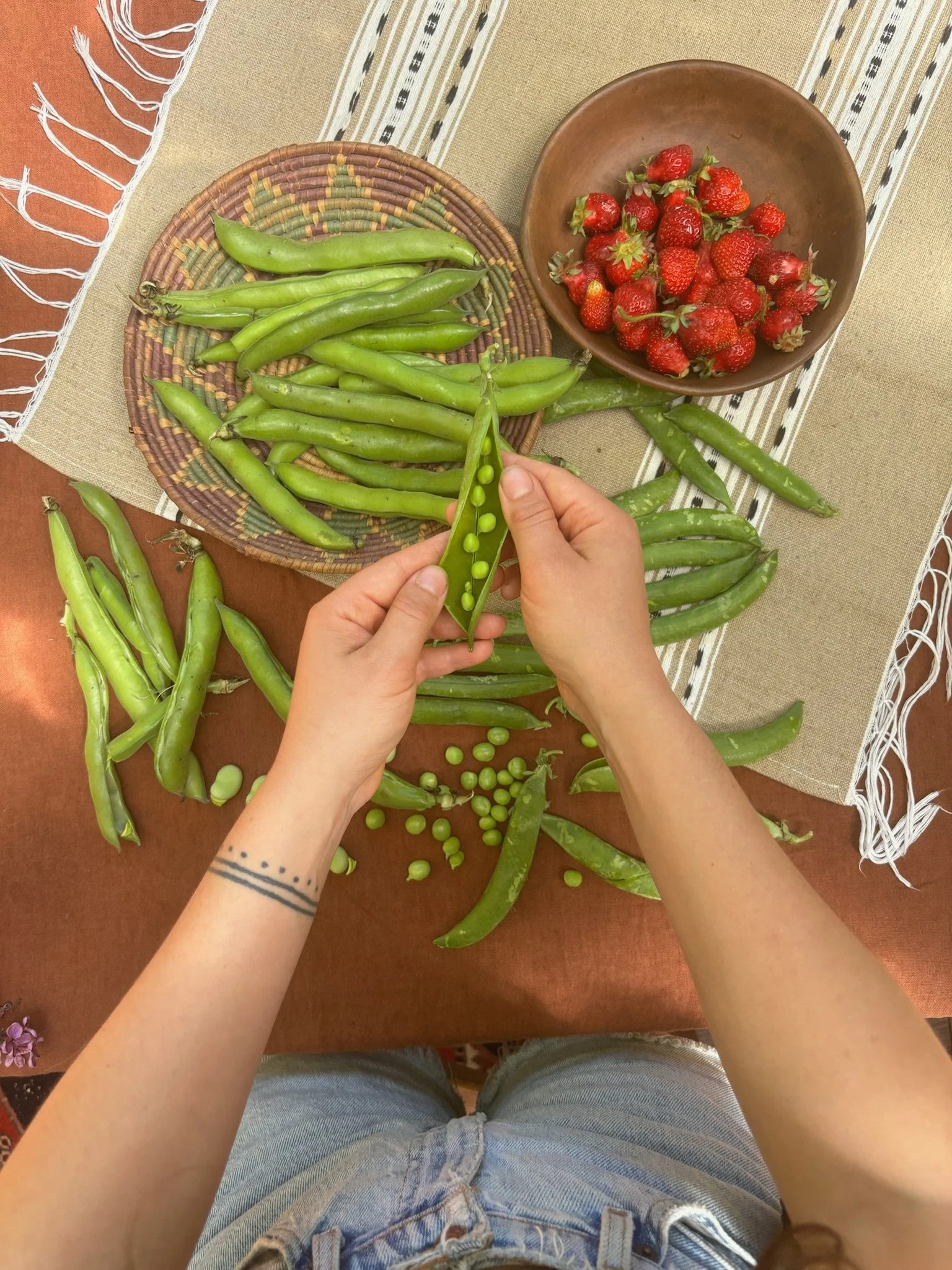
fresh spring shelling peas and springs first strawberries :)
Spring in the Pacific Northwest is a quiet unfurling — and the ingredients reflect that softness.
Nettles for broths and pestos
Spruce tips for dressings, mignonettes, infused syrups
Fiddleheads sautéed with tallow and lemon
Wild onions scattered over roasted vegetables
Rhubarb, sorrel, and early radishes
This is the season of awakenings. Food should be mineral-rich, bright, cleansing, and alive with chlorophyll. As a wild food chef in Portland and the Gorge, these ingredients allow me to tell the story of spring — tender, hopeful, green.
Summer: Abundance, Heat, and Sunlight
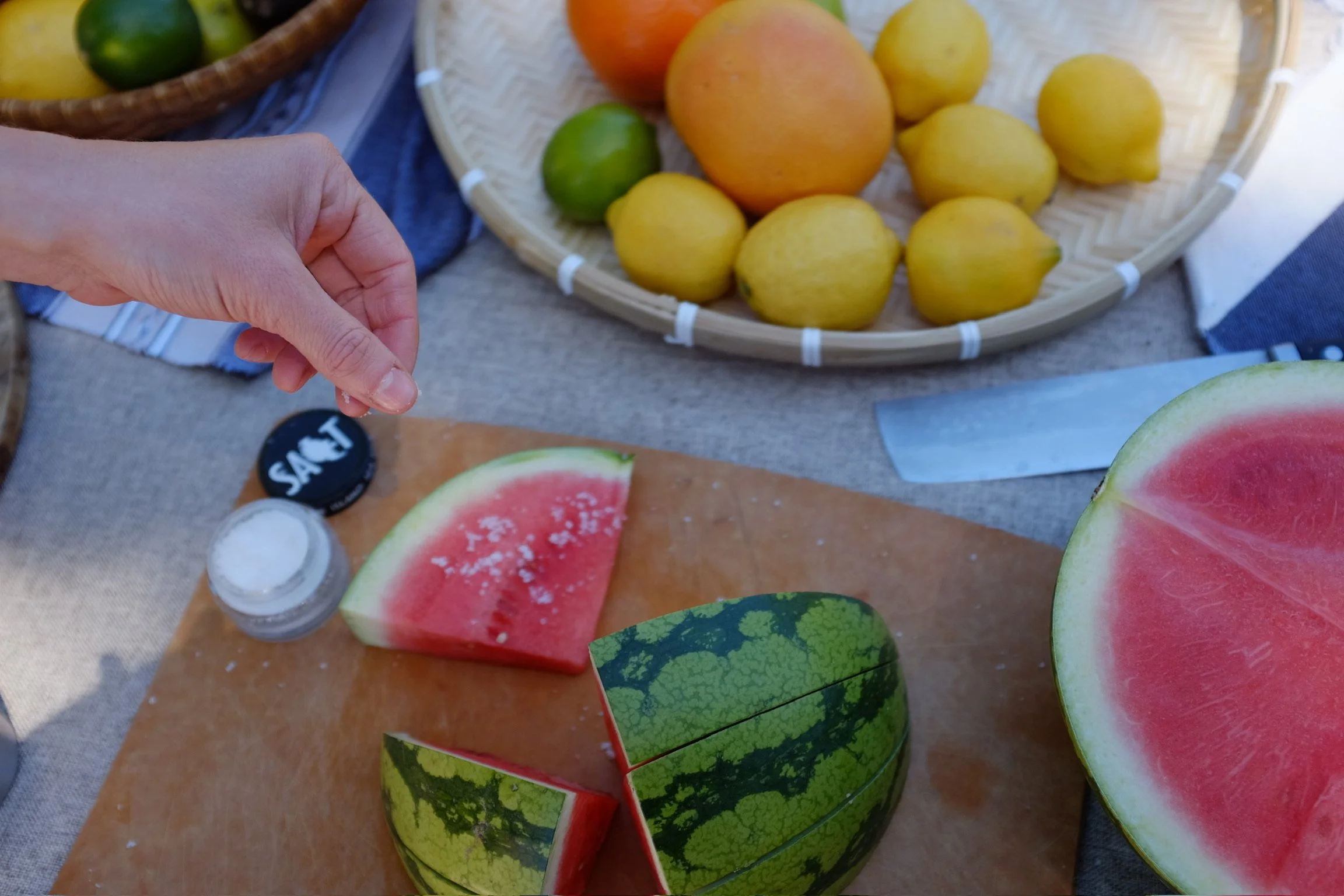
watermelon and salt - I’m not the only one , right ??
Summer is generous. The farms are bursting, the berries are wild and sweet, the coastline is alive with herbs and edible flowers.
You’ll find:
Heirloom tomatoes from small Gorge farms
Huckleberries for sauces, glazes, and desserts
Zucchini blossoms, stuffed or battered
Cherries, peaches, and melons
Fresh herbs — basil, shiso, fennel fronds, lovage
This is when I lean into color and hydration — juicy dishes, vibrant flavors, chilled broths, fire-kissed grill moments. Summer cooking feels like celebration.
Autumn: The Season of Smoke and Gold
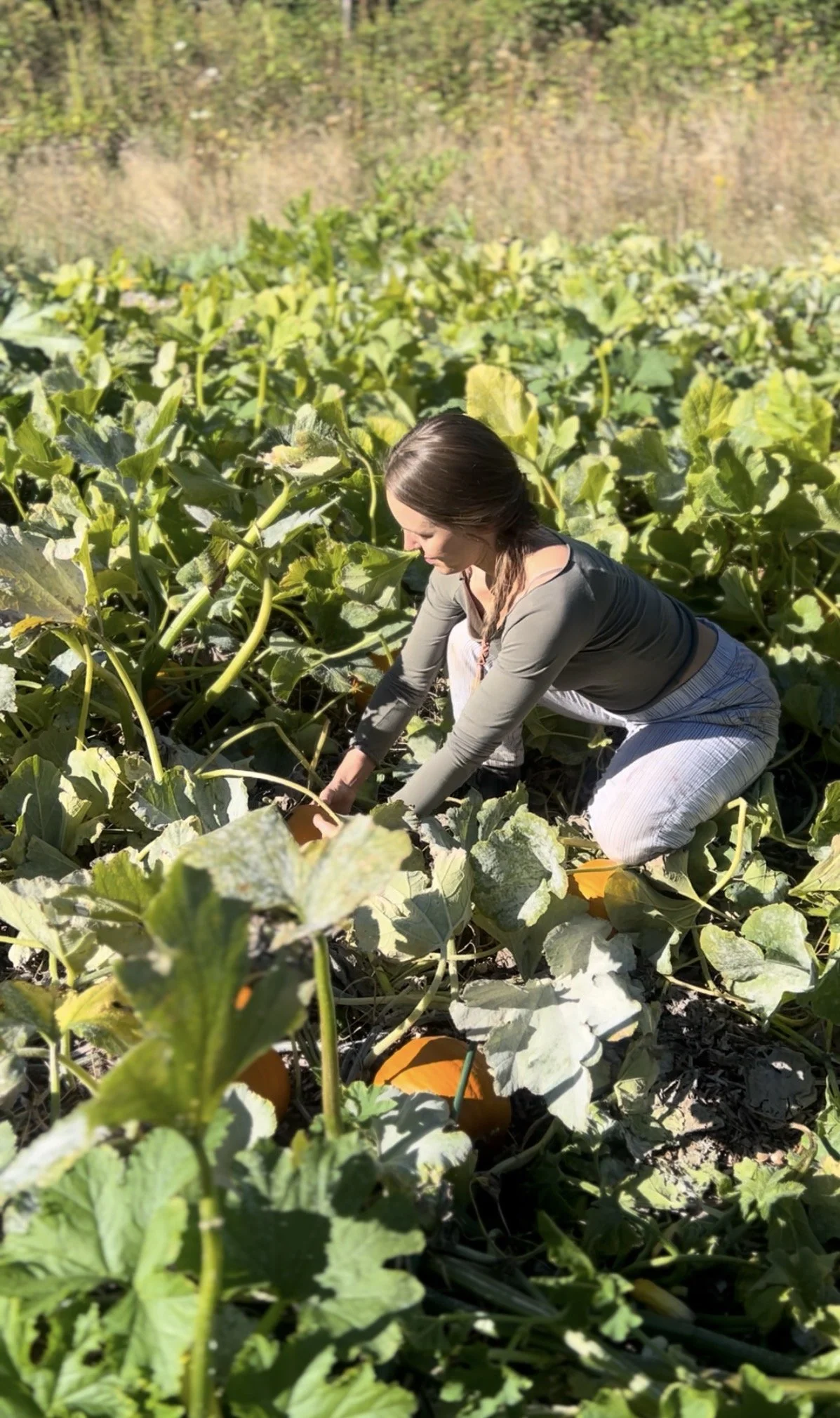
Chef Paige harvesting a pumpkin for homemade pumpkin pie <3
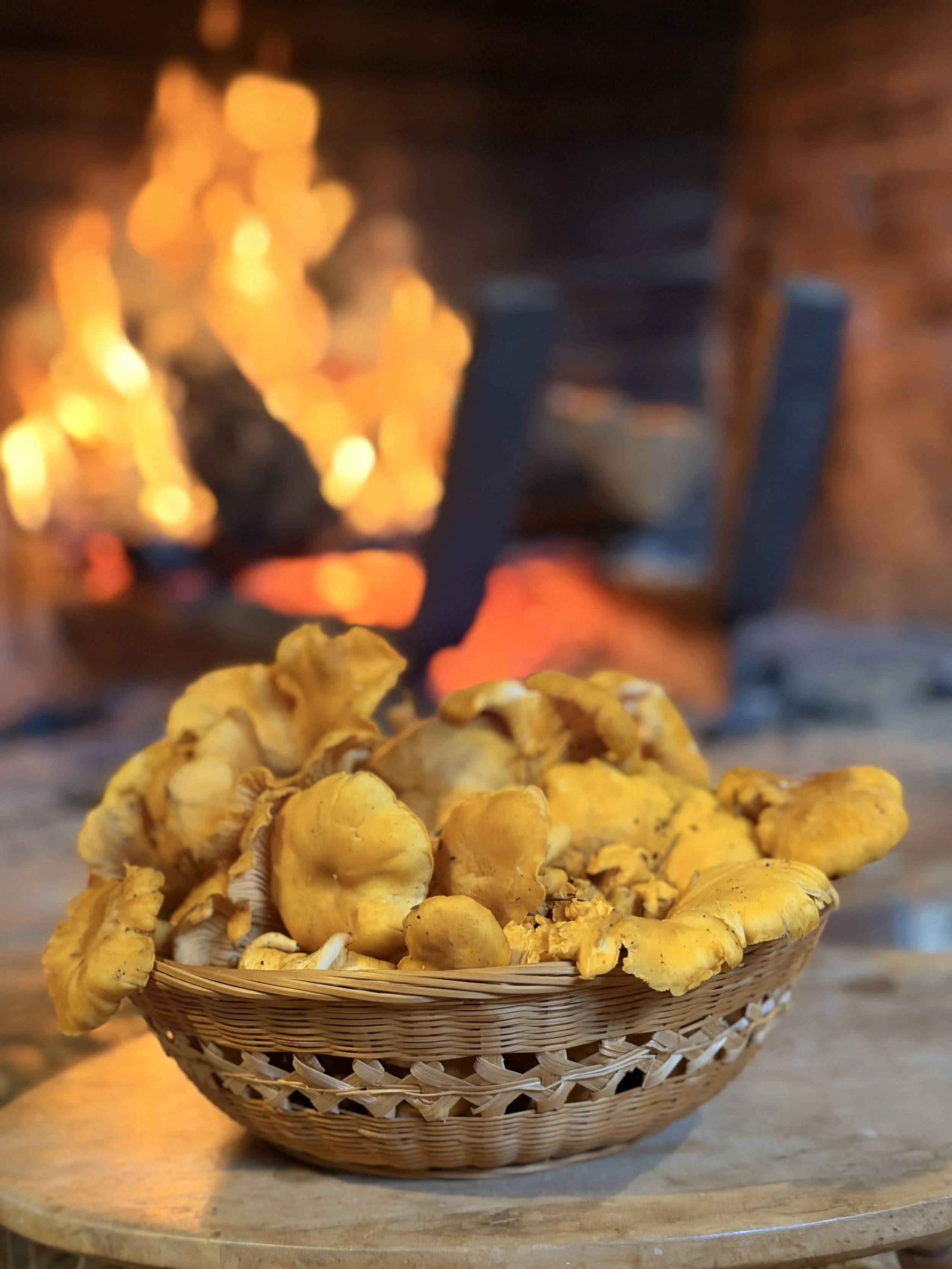
Freshly foraged chanterelles
Fall is my personal favorite season for cooking in the Pacific Northwest. The landscape shifts into deep earthy tones, and the ingredients follow suit.
Wild mushrooms — chanterelles, hedgehogs, matsutake
Apples, pears, quinces
Kabocha squash, delicata, and pumpkin
Cabbages, leeks, and cold-weather greens
Hazelnuts and walnuts
This is the time for braising, roasting, simmering — dishes with depth, smoke, and long slow heat. Autumn meals here feel like a return to the hearth.
Winter: Nourishment, Fat, and Fire
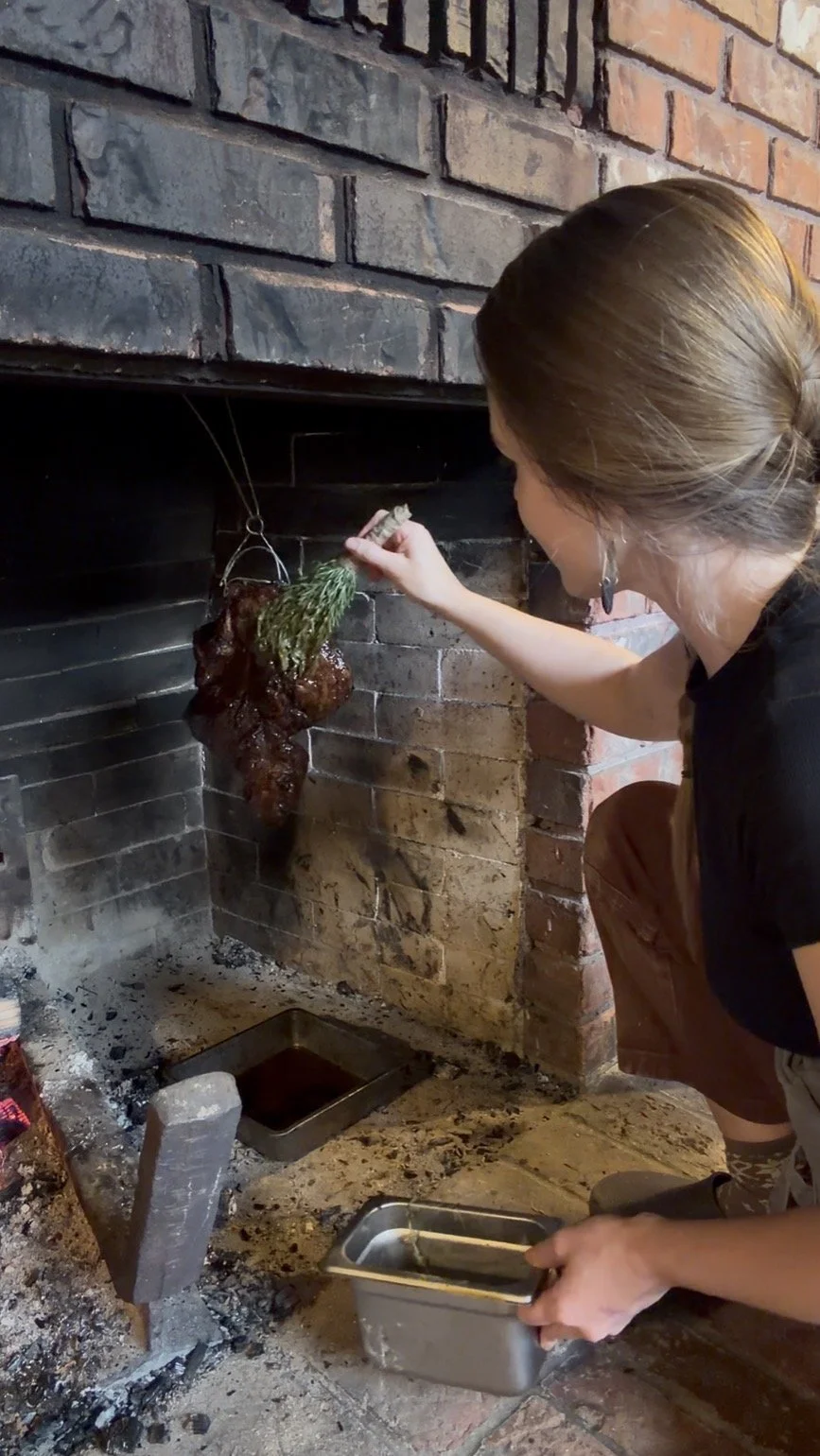
Chef Paige preparing a wild freshly hunted deer leg over an open flame basting melted bone marrow with a rosemary brush
Winter eating in the PNW is simple, primal, and comforting. It’s a season of roots, bones, and warmth.
Grass-fed beef shanks and marrow bones
Long-stored squash and potatoes
Ferments, preserved fruits, dried herbs
Cedar, juniper, and pine as aromatic notes
Winter food grounds us. It brings us back into our bodies. As a farm-to-table chef in the Columbia Gorge, I use this season to create deeply restorative meals — bone broths, braised meats, tallow-roasted vegetables, herbal infusions, and stews that hold you through the cold.
Why Seasonal Eating Matters (Beyond Flavor)
Eating seasonally in the PNW supports:
1. Regenerative Farms & Small Producers
You know this intimately — many of your ingredients come from local farmers, foragers, and ranchers whose stewardship shapes the land.
2. Your Health
Seasonal foods give your body what it naturally needs each time of year — hydration in summer, minerals in spring, fats in winter, antioxidants in fall.
3. Biodiversity & Wild Ecosystems
Choosing seasonal and locally grown foods reduces pressure on global agriculture and keeps native plant cycles intact.
4. Connection
This is perhaps the most important piece. Seasonal eating reconnects you to where you live. To the land beneath your feet. To the people who grow your food. To yourself.
How I Cook Seasonally for Clients
Whether I’m preparing a seven-course tasting menu, delivering weekly meals, or catering an event, I design dishes that reflect the exact week we’re in.
For example:
Early spring meal delivery might include nettles & lamb bone broth soup.
Late summer private dinners often feature fire-grilled peaches with smoked honey.
Autumn retreats may include chanterelle-tallow braises or pear-custard desserts.
Winter menus center around slow-cooked meats, roots, and broth-based dishes.
Seasonality isn’t a rule — it’s a conversation with the land.
Bringing Seasonal PNW Cooking to Your Table
If you’re drawn to food that feels alive, intentional, and connected to place, I’d love to cook for you.
✨ Private dinners & high-end catering in the Columbia Gorge
✨ Farm-to-table meal delivery (3 meals/week, seasonal menu)
✨ Retreat cheffing & immersive culinary experiences
Let’s create something beautiful and seasonal together.
